
Dental Sleep Medicine & Oral Appliance Therapy
Dental Sleep Medicine & Oral Appliance Therapy for Snoring, Obstructive Sleep Apnea (OSA), and Upper Airway Resistance Syndrome (UARS)
Understanding Sleep-Disordered Breathing
Snoring, gasping during sleep, daytime fatigue, and difficulty concentrating are common signs of sleep-disordered breathing.
These conditions include:
Obstructive Sleep Apnea (OSA) – a condition where the airway repeatedly collapses during sleep, reducing oxygen flow
Upper Airway Resistance Syndrome (UARS) – a related condition involving airway restriction without complete collapse, often leading to fragmented sleep and chronic fatigue
Left unaddressed, these conditions are associated with increased cardiovascular stress, metabolic dysfunction, and long-term systemic health concerns.
A Clinical Perspective
Sleep-disordered breathing is frequently underdiagnosed. Many patients adapt to poor sleep quality over time and do not recognize the role airway function plays in overall health.
Clinical patterns often include:
Chronic fatigue despite adequate time in bed
Increased physiologic stress during sleep
Reduced cognitive performance and recovery
Treatment Options
There is no single solution that works for every patient. Treatment must be individualized.
CPAP (Continuous Positive Airway Pressure)
CPAP can be effective for some patients. However:
Requires consistent use and monitoring
Effectiveness may decrease over time
Many patients struggle with long-term compliance
CPAP is a management tool, not a cure.
Dental Sleep Medicine: Oral Appliance Therapy
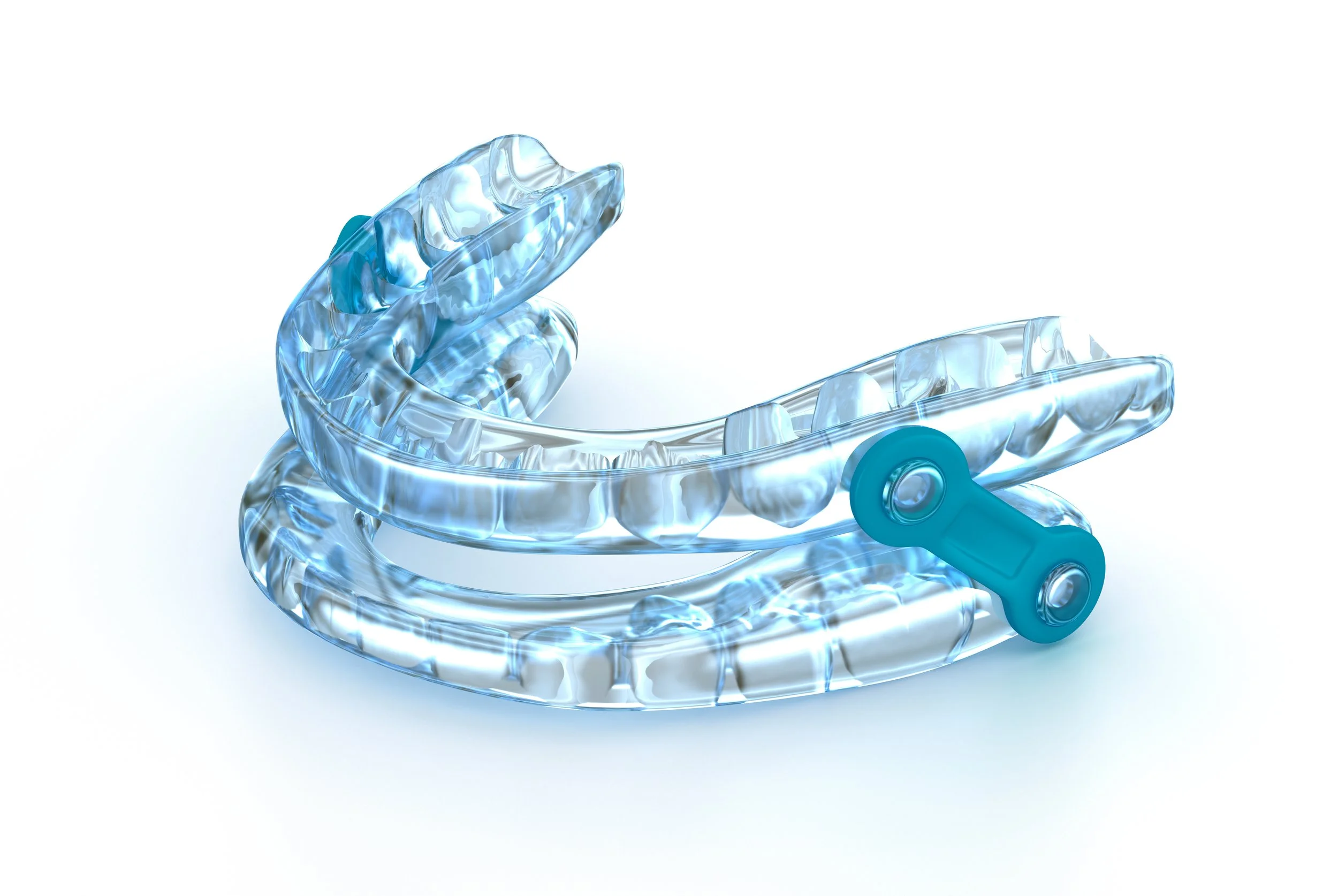
Midwest BioHealth provides custom oral appliance therapy, also known as a Mandibular Advancement Device (MAD).
These devices:
Reposition the lower jaw forward
Help maintain an open airway
Reduce collapse of soft tissues during sleep
For many patients, this leads to improved sleep quality and symptom reduction.
Clinical Considerations
Oral appliance therapy is effective but may lead to changes in bite over time. These risks are discussed prior to treatment.
In some cases, patients pursue orthodontic or orthopedic care to establish long-term structural stability.
A More Foundational Approach
Orthognathic (jaw) surgery may be considered for patients seeking a structural correction of airway limitation.
This procedure repositions the maxilla and mandible to increase airway space and improve breathing.
Referrals are made to experienced oral and maxillofacial surgeons, including:
Dr. William Arnett
Dr. Michael Gunson
Surgeons trained within their treatment philosophy
Advanced Airway Protocols (Referral-Based Care)
Advanced protocols such as Oral Systemic Balance (OSB), developed by Farrand Robson, DDS, and taught by Richard Quinttus, DDS, can provide meaningful outcomes for select patients.
These treatments are highly technique-sensitive.
At this time, patients seeking this level of care are referred to Dr. Richard Quinttus in Dayton, Ohio.
Next Steps
Patients experiencing symptoms of sleep-disordered breathing should begin with a comprehensive evaluation.
Midwest BioHealth helps determine appropriate treatment options and guides patients toward the most effective path forward based on individual needs.
Fast Facts About Obstructive Sleep Apnea (OSA) and Upper Airway Resistance Syndrome (UARS)
Common Symptoms in Children
Daytime fatigue and poor sleep quality
Nightmares or night terrors
Snoring
Dark circles under the eyes
Bruxism (grinding)
Bed wetting
ADD / ADHD-like symptoms
Difficulty concentrating in school
Behavioral changes (irritability, aggression)
Speech development issues
Crowding of teeth
Chronic allergies
Enlarged tonsils and adenoids
Frequent ear infections
Delayed growth
Asthma
Associated Conditions and Prevalence
Patients with the following conditions frequently have underlying sleep-disordered breathing:
ADHD: 10–30%
Alzheimer’s disease: 30–60%
Depression: 20–40%
Stroke: 40–70%
Diabetes: 30–60%
Heart failure: 40–70%
Poorly controlled high blood pressure: 60–80%
Atrial fibrillation: 30–50%
Acid reflux: 20–40%
Obesity: 40–80%
Common Symptoms in Adults
Daytime sleepiness and chronic fatigue
Restless sleep and insomnia
Sudden nighttime awakenings
Snoring and pauses in breathing
Bruxism (clenching and grinding)
Cracking and crowding of teeth
Mouth breathing and dry mouth (xerostomia)
Worsening gum health
TMJ dysfunction and pain
Anxiety, depression, irritability
Difficulty with concentration and memory
Morning headaches
Frequent nighttime urination
Chronic allergies
Hormonal imbalance
Weight challenges and metabolic issues
Acid reflux
Systemic inflammation
Serious associations include:
Increased risk of heart attack and stroke
Increased risk of dementia
Increased risk of certain cancers
Impact of Poor Sleep Quality
Reduced quality of life
Falling asleep during the day
Increased risk of motor vehicle accidents
Strain on relationships
Memory impairment and brain fog
Reduced critical thinking ability
Poor academic or job performance